India Politics Policy Battles
The Unfolding Drama of India’s Political Arena
The political landscape of the world’s largest democracy is a theatre of perpetual motion, where every day brings new strategies, conflicts, and narratives. Keeping pace with the latest India politics is essential to understand the forces shaping the nation’s immediate future and its global stance. The India politics is currently dominated by the high-stakes countdown to the 2024 Lok Sabha elections, a mammoth democratic exercise that will determine the country’s leadership for the next five years.
This news stream captures not just electoral calculations but also the profound ideological clashes, the complex mathematics of coalition-building, and the intense policy debates that define the world’s most populous democracy. For observers, investors, and citizens alike, the latest India politics provides a real-time pulse check on the health and direction of the Indian republic.
The sources delivering the latest India politics are vast and varied, reflecting the nation’s vibrant media ecosystem. From the primetime debates on national news channels to the granular reporting of regional newspapers and the instantaneous, often polarized discourse on social media, information flows ceaselessly.
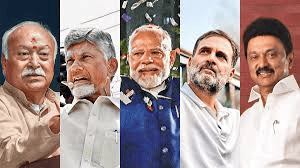
At the core of the latest India politics is the grand contest between the ruling Bharatiya Janata Party (BJP), led by Prime Minister Narendra Modi and seeking a historic third term, and a broad but fragile coalition of over two dozen opposition parties called the Indian National Developmental Inclusive Alliance (INDIA). This primary clash, however, is interwoven with the ambitions of powerful regional satraps and the volatile sentiments of an electorate grappling with issues of identity, economy, and governance.
India Politics Latest News > Pausslot Online Games News
This article synthesizes the key themes and breaking stories that constitute the latest India politics. We will delve into the strategic preparations and campaign rhetoric for the 2024 polls, analyze the crucial state-level political developments that influence national equations, examine the significant parliamentary and policy battles, and explore the socio-cultural undercurrents driving voter sentiment. By providing a structured overview of these dynamic developments, this guide aims to cut through the noise and offer a clear, comprehensive snapshot of the political forces currently at play in India.
The 2024 Electoral Battlefield: Strategies and Narratives
The overarching narrative in the latest India politics is the impending general election. The political climate is charged with mega-rallies, manifesto promises, and a fierce war of narratives. The BJP’s campaign, heavily centered on the leadership of Prime Minister Modi, champions themes of national security, Hindu cultural pride, and a record of large-scale infrastructure development and welfare delivery.
The slogan “Modi’s Guarantee” has become ubiquitous, promising continuity and decisive governance. Conversely, the INDIA alliance is attempting to forge a united front, countering with a focus on unemployment, inflation, alleged threats to democratic institutions and constitutional safeguards, and social justice. The daily latest India politics is filled with updates from the campaign trail, where every speech and rally is dissected for its messaging and potential impact.
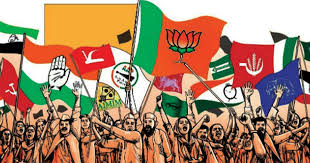
A critical and messy sub-plot within this electoral story is the fraught “seat-sharing” negotiations among opposition allies. In India’s first-past-the-post system, preventing a split in the anti-BJP vote is paramount. The latest India politics is rife with reports of contentious talks and breakdowns between Congress and regional heavyweights like the Samajwadi Party (SP) in Uttar Pradesh, the Trinamool Congress (TMC) in West Bengal, and the Aam Aadmi Party (AAP) in Punjab and Delhi.
Each day brings news of a new potential alliance, a bitter public exchange, or a settled pact, directly influencing the electoral calculus. Simultaneously, the BJP’s own expansion strategy, aiming to make inroads in the South and East by either wooing regional parties or splitting their vote banks, is a subject of intense scrutiny.
Beyond alliances, specific issues are being weaponized. The opposition is striving to make “price rise” and “joblessness” its central attack lines, citing government data to highlight economic distress. The BJP, meanwhile, is leveraging the recent consecration of the Ram Temple in Ayodhya as a powerful symbol of fulfilled civilizational promise, alongside achievements like the abrogation of Article 370 in Kashmir. The role of central investigative agencies, with a stream of cases against opposition leaders, is a constant flashpoint, with the INDIA bloc crying “political vendetta.” This issue features heavily in accusatory and defensive latest India politics, shaping perceptions of institutional integrity ahead of the polls.
State Politics: The Crucible of National Fortunes
While the national election captivates attention, the latest India politics from the states often serves as a decisive indicator of broader trends. The outcomes of recent assembly elections in Rajasthan, Madhya Pradesh, and Chhattisgarh in late 2023, all won by the BJP, have significantly boosted the ruling party’s morale and shaped the pre-2024 narrative. These results demonstrated the BJP’s continued dominance in the Hindi heartland and raised questions about the Congress’s viability as the principal national opposition. Analysis of these state polls—voter turnout, caste calculus, and local leadership—forms a critical part of expert commentary in the latest India politics.
The politics in states with strong regional leaders constitutes its own compelling saga within the latest India politics. In West Bengal, Chief Minister Mamata Banerjee’s TMC is engaged in a bitter, no-holds-barred fight with the BJP for control of the state’s 42 Lok Sabha seats. In Tamil Nadu, the DMK-led Secular Progressive Alliance is firmly positioned against the BJP, making the southern state a tough frontier for the saffron party. The strategic choices of regional chieftains like Naveen Patnaik in Odisha or Y.S. Jagan Mohan Reddy in Andhra Pradesh—whether to ally with the BJP, the INDIA bloc, or remain neutral—are the subject of endless speculation and breaking news, as their decisions can dramatically alter the national outcome.
Furthermore, internal dynamics within key states generate continuous political news. In Maharashtra, the fragile ruling coalition of the BJP with the Shiv Sena and NCP factions is constantly tested, with every defection or court ruling making headlines. In Bihar, the durability of the JD(U)-BJP alliance under Nitish Kumar, known for his political pivots, is perennially under a scanner. The latest India politics must therefore be attuned to these regional undercurrents, as a crisis in a single major state like Maharashtra or Uttar Pradesh can send shockwaves through the national political equation, making state-level reporting indispensable for a complete picture.
Parliament and Policy: The Legislative Battleground
When Parliament is in session, it transforms into the central stage for political confrontation, and its proceedings are a vital component of the latest India politics. The recent budget session was pivotal, with the government tabling its final budget before the elections—an interim budget that avoided major populist announcements but signaled policy continuity. The passage of landmark legislation, such as the new criminal codes (Bharatiya Nyaya Sanhita, etc.), in the previous session continues to be a topic of debate, with the opposition criticizing the process and content while the government hails it as a decolonizing reform. Every bill and debate is framed within the larger political narrative for the upcoming polls.
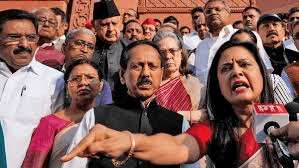
However, a persistent feature of parliamentary latest India politics is disruption and deadlock. The Winter Session and parts of the Budget Session were frequently adjourned as the opposition demanded discussions on issues like the security breach in Parliament, the ethnic conflict in Manipur, and allegations against the government. This logjam is portrayed by the ruling party as the opposition’s unwillingness to debate, while the opposition frames it as a protest against the government’s refusal to be accountable. These clashes spill out into press conferences and media bytes, fueling the daily cycle of accusatory latest India politics.
Beyond the spectacle, substantive policy debates do occur and are covered by serious analysts. Discussions on the economy, foreign policy, and social welfare during dedicated debates provide a platform for articulating divergent visions. The conduct of the Speaker and the Chairperson in managing the house, the quality of ministerial responses, and the depth of research shown by MPs are all indicators of institutional health that are commented upon in governance-focused latest India politics. The parliament session thus acts as a concentrated microcosm of the nation’s political strife and its potential for deliberation.
The Judiciary in the Political Fray
The intersection of law and politics is exceptionally pronounced in India, making Supreme Court and High Court rulings major generators of latest India politics. Landmark judgments can instantly reset the political board. The most seismic recent event was the Supreme Court’s unanimous striking down of the electoral bonds scheme, declaring it unconstitutional and ordering the State Bank of India to disclose all donor details to the Election Commission. This judgment, addressing the opaque funding of politics, has massive repercussions, embarrassing all major parties and triggering a fresh political debate on transparency, a story that dominated latest India politics for weeks.
Ongoing legal battles are inextricably linked to political fortunes. The multitude of cases being pursued by the Enforcement Directorate (ED) and Central Bureau of Investigation (CBI) against prominent opposition leaders—from Delhi Chief Minister Arvind Kejriwal to former Jharkhand CM Hemant Soren—are covered not as mere legal procedures but as central political narratives. Every arrest, bail hearing, or court observation is interpreted for its political timing and impact. The opposition’s consistent allegation of these agencies being “weaponized” by the central government is a powerful political charge that resonates in their campaigning and is a staple of critical latest India politics reporting.
Constitutional benches of the Supreme Court are also hearing politically sensitive cases whose outcomes could influence the pre-election environment. These include challenges to the abolition of Article 370, petitions concerning the Delhi government’s control over services, and matters related to minority rights. The appointments to the higher judiciary itself, through the collegium system, and the government’s pace of approving recommendations occasionally become politicized issues. This deep enmeshment of the judiciary in political disputes ensures that the legal corridor is often an extension of the political battlefield, with every significant hearing producing breaking news.
Ideological Contestations: Nationalism, Secularism, and Identity
Beneath the tactical maneuvering lies a deeper, more profound ideological war that frames much of the latest India politics. This is the clash between the BJP’s vision of a culturally assertive, Hindu-majoritarian nation (Hindutva) and the opposition’s defense of a pluralistic, secular republic as enshrined in the constitution. Issues that touch upon this fault line—like the implementation of the Citizenship Amendment Act (CAA), the demand for a Uniform Civil Code (UCC), or controversies over religious conversions—are not just policy differences but existential political battles. The latest India politics constantly analyzes how these themes are playing out in different regions and among various social groups.
This ideological contest permeates cultural and historical discourse. Government initiatives to revise school textbooks, rename cities with Islamic-era names, and celebrate historical Hindu icons are portrayed by the ruling party as correcting historical neglect and by the opposition as majoritarian revisionism eroding India’s syncretic fabric. The politics of language, with the continued promotion of Hindi as a lingua franca, sparks resistance in states like Tamil Nadu and West Bengal, creating regional flashpoints. These cultural-political debates are a constant feature of the latest India politics, reflecting an ongoing struggle to define the nation’s identity and historical narrative.
Simultaneously, the potent politics of caste and social justice remains a critical force. The opposition’s united demand for a nationwide caste census is a direct challenge to the BJP’s social coalition, which has successfully attracted non-dominant Other Backward Classes (OBCs) and sections of Dalits. The BJP’s counter-strategy involves highlighting sub-categorization within OBCs and elevating leaders from these communities. The latest India politics must decode how these complex social engineering projects are unfolding, as they hold the key to constructing winning electoral majorities in India’s fragmented polity. The rise of leaders from marginalized communities to the presidency and other high offices is also a significant political signal.
The Economic Debate: Growth Claims and Livelihood Concerns
Economic management is a fiercely contested arena, and competing claims about the economy generate substantial latest India politics. The government and its supporters point to India’s position as the world’s fastest-growing major economy, rising GDP, record digital transactions, and massive infrastructure spending as evidence of unparalleled success. Initiatives like the Production Linked Incentive (PLI) schemes and the push for “Atmanirbhar Bharat” (self-reliance) are central to this narrative of transformative growth. High-profile events like the inauguration of new parliament buildings or semiconductor plants are showcased as symbols of this new India.
The opposition’s economic narrative, however, focuses on lived experience rather than macro-indicators. They highlight persistent high unemployment, especially among educated youth, rising inequality, and the distress in the agricultural sector. The latest India politics is replete with debates over government employment data, reports of rising food inflation impacting household budgets, and the plight of small and medium enterprises. The opposition seeks to frame the election as a contest between a “few billionaires” who have prospered and the “common people” who have been left behind, attempting to build a class-based critique of the government’s economic model.
Welfare politics is another critical front. The government’s extensive network of direct benefit transfers (DBT)—providing free food grains, cash support, and subsidies to hundreds of millions—is a formidable political tool. The latest India politics analyzes the electoral impact of these schemes, which have created a vast beneficiary base. The opposition argues these are palliatives that substitute for quality jobs and structural reform. This clash of economic visions—between a narrative of national prestige and macro-growth versus one of micro-distress and inequality—forms one of the core battlegrounds in the run-up to 2024, with each new economic data release instantly politicized.
The Road to 2024: Scenarios, Forecasts, and Implications
As the election draws nearer, the latest India politics is increasingly dominated by scenario-building, opinion polls, and forecasting. Psephologists, media houses, and political strategists dissect every by-election result, every demographic shift, and every opinion survey to predict possible outcomes. The key questions driving this speculative coverage are: Can the BJP improve its 2019 tally or will it face anti-incumbency? Does the INDIA bloc have the organizational cohesion and leadership clarity to pose a credible challenge, particularly in the crucial Hindi heartland? What will be the impact of regional parties’ performance on the final numbers? This prognosticative latest India politics influences campaign resource allocation, candidate selection, and even the morale of party workers.
Beyond the immediate electoral result, the latest India politics also grapples with longer-term implications. A third consecutive term for Modi would solidify a new political era defined by a dominant-party system and presidential-style campaigning centered around a single leader. A stronger-than-expected opposition performance could revitalize a more competitive multi-party landscape. The election will also be a referendum on the state of India’s democratic institutions—the Election Commission’s neutrality, the independence of the judiciary, and the freedom of the press—all of which have been subjects of heated debate. The role of digital campaigning, social media polarization, and the management of misinformation will be critical factors analyzed in post-election latest India politics.
Ultimately, the latest India politics is the vibrant, chaotic, and compelling story of a billion-plus people exercising their sovereign will. It is a narrative of ambition and ideology, of calculation and emotion, of ancient identities and modern aspirations. Following it is to witness democracy on a scale unparalleled in human history, where every day brings a new twist in the tale of a nation defining its destiny. The headlines of the latest India politics are not just news; they are the first draft of India’s future.
About the Author