Federal Updates
Navigating the Evolving Landscape of India Governance
The administrative machinery of the world’s largest democracy is in a constant state of evolution, making an understanding of the latest India governance developments crucial for citizens, analysts, and global observers alike. Latest India governance encompasses the sweeping policy decisions, technological integrations, administrative reforms, and inter-governmental dynamics that define how India is run. This is not merely about political news; it is about the structural and procedural changes that impact service delivery, economic growth, and social welfare for over 1.4 billion people. Tracking the latest India governance trends offers a window into the priorities of the state, the challenges of scale, and the innovative solutions being deployed to manage complexity in the 21st century.
The sources for the latest India governance are manifold, ranging from official government portals and parliamentary bulletins to in-depth analyses by policy think tanks and credible media houses. Key areas under this umbrella include the implementation of flagship national missions, critical judgments by the Supreme Court that redefine administrative boundaries, the ongoing fiscal and administrative negotiations between the Centre and states, and the transformative push for digitizing the citizen-state interface. In a nation marked by its diversity, the latest India governance often highlights the tension between a desire for uniform policy and the practical necessities of regional adaptation, offering a fascinating study in applied federalism.
Next Latest News > Pausslot : Booming Online Gaming in India
This article provides a detailed synthesis of the most significant and current trends in latest India news. We will examine major policy initiatives and legislative actions from the Union government, delve into the critical updates on Centre-State relations and fiscal federalism, analyze the rapid digitization of public services, review recent economic and bureaucratic reforms, and assess the strengthening of grassroots democratic institutions. By consolidating these multifaceted updates, this guide aims to present a clear and comprehensive picture of the administrative forces currently shaping the Republic of India.
Central Policy Drive: Legislation and National Missions
At the heart of the latest India governance is the proactive legislative and policy agenda of the Union Government. Recent sessions of Parliament have been pivotal, passing transformative legislation that seeks to overhaul colonial-era frameworks. A landmark development in the latest India governance is the passage of new criminal laws—the Bharatiya Nyaya Sanhita, Bharatiya Nagarik Suraksha Sanhita, and Bharatiya Sakshya Adhiniyam—replacing the Indian Penal, Criminal Procedure, and Indian Evidence Act. These laws introduce modern provisions related to cybercrime, organized crime, and community service, representing a significant shift in the country’s legal-administrative architecture.
Concurrently, the implementation of pan-national missions continues to dominate administrative focus. Updates on the PM Gati Shakti National Master Plan, which uses digital mapping to coordinate multi-modal infrastructure projects, are a regular feature in the latest India governance reports. This initiative aims to break departmental silos and accelerate project completion. Furthermore, the relentless expansion of the Direct Benefit Transfer (DBT) ecosystem remains a cornerstone. Recent data shows trillions of rupees delivered directly to beneficiaries’ accounts for subsidies on food, fertilizer, and LPG, significantly reducing leakage and establishing a new paradigm in welfare governance, a frequent highlight in efficiency-focused latest India governance analyses.
Another critical area is social sector governance. The latest India governance news consistently covers the Ayushman Bharat health insurance scheme’s expansion to new beneficiary categories and the operational challenges of the National Digital Health Mission. In education, the rollout of the National Education Policy (NEP) 2020, with its emphasis on holistic learning and vocational integration, drives updates from states on curriculum changes and teacher training. These central policies, while formulated in New Delhi, require intricate coordination with state machinery, making their implementation a key metric of cooperative governance covered in the latest India governance discourse.
Federal Dynamics: Finance, Authority, and Persistent Tensions
The relationship between the Union and the States is perhaps the most dynamic and contentious facet of latest India governance. A perpetual issue is the devolution of financial resources. The recommendations of the 15th Finance Commission and the subsequent release of funds to states are closely tracked. Recent tensions have flared around the discontinuation of the Goods and Services Tax (GST) compensation regime for states, with many states alleging a fiscal squeeze. Negotiations in the GST Council, where states and the Centre vote, are thus critical events in the latest India governance calendar, directly impacting state budgets and their capacity to deliver services.
The role of Governors and the use of central agencies have become flashpoints, featuring prominently in contentious latest India governance reports. Opposition-ruled states like Kerala, Tamil Nadu, and Punjab have repeatedly accused Governors of overstepping their constitutional bounds by delaying assent to bills, interfering in university appointments, and making partisan statements. Simultaneously, the actions of central investigative agencies like the Enforcement Directorate (ED) and Central Bureau of Investigation (CBI) against state government ministers and officials are framed by critics as tools of political coercion, while the Centre maintains they are acts of lawful enforcement against corruption. This friction tests the boundaries of India’s federal compact daily.
On a more collaborative note, the latest India governance also highlights platforms for cooperative federalism. The NITI Aayog’s governing council meetings serve as a forum for the Prime Minister to engage with all Chief Ministers on national agendas. Initiatives like the Aspirational Districts Programme, which fosters competition among districts on development indicators, are showcased as successful models of Centre-State collaboration. Furthermore, the varying success of states in attracting investment under the Production Linked Incentive (PLI) schemes or managing their power distribution companies (discoms) provides a comparative lens, offering valuable case studies in the diverse outcomes of governance within a shared constitutional framework.
Digital Public Infrastructure: Reshaping Citizen-State Interaction
A transformative and widely lauded trend in the latest India governance is the rapid adoption of Digital Public Infrastructure (DPI). The India Stack—a suite of interoperable, open-source APIs including Aadhaar for identity, UPI for payments, and DigiLocker for documents—has become a global benchmark. The latest India governance updates frequently announce new services integrated into this stack. For instance, recent initiatives include linking voter IDs with Aadhaar for cleaner electoral rolls and expanding the use of the Ayushman Bharat Digital Health ID for creating longitudinal health records. This tech-enabled governance is praised for enhancing inclusion, transparency, and efficiency.
The push for “Ease of Living” through digital means is relentless. The UMANG app continues to aggregate more government services, aiming to be a one-stop portal. In the judiciary, the e-Courts project is making case information and virtual hearings more accessible. For taxpayers, the faceless assessment and appeal system minimizes human interface and potential harassment. These developments are staples in progressive latest India governance reporting, often accompanied by impressive statistics on transaction volumes and user adoption. They represent a fundamental shift towards a more accessible, accountable, and user-centric administration.
However, the latest India governance discourse also critically examines the challenges of this digital leap. The persistent digital divide, especially in rural and elderly populations, risks excluding the most vulnerable. Concerns over data privacy and security remain acute in the absence of a fully operational Data Protection Board under the new Digital Personal Data Protection Act (2023). Instances of glitches in crucial platforms like the Aarogya Setu app during the pandemic or CoWIN for vaccinations highlight the risks of over-reliance on complex digital systems. Thus, while digital governance is a celebrated narrative, its responsible and equitable implementation is a key focus of balanced latest India governance analysis.
Economic Administration and Bureaucratic Reforms
The governance of the economy involves a complex set of institutions and policies, and updates here form a substantial part of the latest India governance narrative. A central focus has been the implementation of the Production Linked Incentive (PLI) scheme across 14 key sectors, from electronics to pharmaceuticals. Recent news covers the disbursement of incentives to eligible companies, the resulting growth in manufacturing exports, and the challenges in meeting certain sectoral targets. This industrial policy represents a strategic shift in the state’s role from a regulator to a catalyst for specific industrial growth.
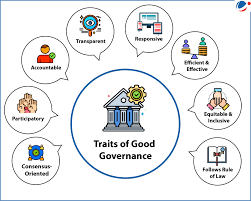
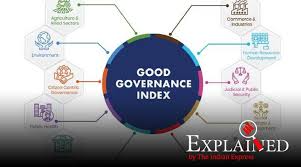
Administrative reforms aimed at improving efficiency and accountability are another priority. The latest India governance reports on mission-mode approaches to solve long-standing issues, such as the Vivad se Vishwas scheme for settling contractual disputes between government and contractors, or the Special Committee to identify and repeal obsolete laws. The annual “Good Governance Index,” which ranks states and union territories, generates significant debate about performance metrics and benchmarking. Furthermore, reforms in personnel administration, such as the controversial Agnipath scheme for short-term military recruitment, showcase how governance decisions in one sector can have wide-ranging social and economic ripple effects.
The governance of public resources and enterprises is also under the spotlight. The strategic disinvestment of major Public Sector Undertakings (PSUs), though slower than anticipated, continues to be a significant policy story. The management of key infrastructure through public-private partnerships (PPPs) in roads, airports, and railways is closely monitored for efficiency gains. Additionally, the government’s response to global economic pressures—managing inflation through monetary policy coordination with the Reserve Bank of India (RBI), ensuring food security via buffer stock management, and navigating international trade negotiations—exemplifies the reactive and strategic dimensions of economic governance captured in the latest India governance bulletins.
Grassroots Empowerment: Panchayats and Urban Local Bodies
Strengthening the third tier of governance is a stated constitutional goal, and progress here is a vital, though often under-reported, aspect of latest India governance. The health of Panchayati Raj Institutions (PRIs) and Urban Local Bodies (ULBs) is critical for last-mile service delivery. Recent news has highlighted the successful completion of local body elections in several states, sometimes after long delays due to legal or political hurdles. The extent of “devolution” of funds, functions, and functionaries to these bodies remains uneven, and reports comparing states on these parameters are important for advocating deeper decentralization.
Innovations at the local level provide encouraging stories in the latest India governance landscape. The widespread use of social audits for the Mahatma Gandhi National Rural Employment Guarantee Act (MGNREGA), where village assemblies (Gram Sabhas) scrutinize expenditure, is hailed as a powerful tool for transparency. The SVAMITVA scheme, which uses drone surveys to provide rural households with legal property cards (Title Deeds), is empowering villagers and unlocking rural capital. The performance of women-led panchayats, enabled by constitutionally mandated reservations, in improving local development outcomes is another positive trend being documented.
However, challenges persist and are reported in a balanced latest India governance overview. Urban local bodies, especially in mega-cities, struggle with financial autonomy, overlapping jurisdictions with state agencies, and the immense pressure of managing migration, waste, and water scarcity. The implementation of the Smart Cities Mission has shown mixed results, with some cities making strides in area-based development and technology integration, while others lag. The effective governance of metropolitan regions, which requires coordination between multiple municipal corporations, development authorities, and state departments, remains a complex puzzle, making it a recurrent topic in urban-focused administrative news.
Judicial Interventions and Governance Accountability
The judiciary in India often acts as a crucial check and balance, and its pronouncements directly influence the latest India governance. Landmark Supreme Court judgments can mandate administrative overhauls. Recent examples that have dominated governance discussions include the Court’s directives on air pollution control in Delhi-NCR, ordering the formation of a permanent Commission for Air Quality Management. Similarly, rulings on electoral bonds, which struck down the scheme and mandated disclosure of donors, have profound implications for political finance governance, forcing systemic changes in how party funding is recorded and revealed.
Public Interest Litigation (PIL) remains a potent instrument for citizens to hold the executive accountable. Through PILs, courts have given directions on diverse governance issues—from the treatment of migrants during the COVID-19 lockdown and the regulation of clinical trial drugs to the protection of forest lands and the rights of marginalized communities. This “judicial activism” is a double-edged sword covered in the latest India governance analysis; it is praised for filling governance voids in areas of executive inertia but is also criticized for straying into the domain of policy-making, raising questions about the separation of powers.
The governance of the judiciary itself is an internal reform story. Efforts under the e-Courts project to digitize case records, enable virtual hearings, and reduce case backlogs are monitored as part of the broader public service delivery reform. The ongoing, heated debate about the method of judicial appointments—the current collegium system versus a proposed National Judicial Appointments Commission (NJAC)—is a meta-governance issue concerning who oversees the appointment of judges. The efficiency and accessibility of the justice delivery system are fundamental to economic confidence and social justice, making its reform an integral, if complex, component of the national governance agenda.
The Road Ahead: Challenges and Emerging Priorities
Looking forward, the trajectory of latest India governance points toward several key challenges and innovations. A major priority is the civil service reform to build future-ready bureaucrats with specialized domain expertise, greater accountability for outcomes, and a performance-oriented culture. The integration of emerging technologies like Artificial Intelligence (AI) for predictive governance in areas like tax compliance, disease surveillance, and traffic management is on the horizon, promising to make administration more proactive.
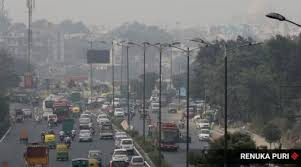
The challenges are significant and will continue to shape headlines. Effective environmental governance—managing acute water scarcity, deteriorating air quality in cities, and building climate resilience—requires unprecedented inter-state and Centre-state coordination. The need for greater transparency in political and bureaucratic functioning, tackling deep-rooted corruption, and insulating institutions from partisan capture remains a persistent struggle. Balancing rapid economic development with social equity and environmental sustainability is the ultimate governance trilemma for a nation of India’s scale and diversity.
In essence, the story of latest India governance is the story of a nation relentlessly experimenting and adapting to administer itself. It is a narrative of scale meeting innovation, of tradition confronting technology, and of a diverse federation striving for unity in purpose. By following these developments, one gains insight into the monumental task of governing a civilizational-state as it seeks to secure a prosperous, just, and influential place in the 21st-century world order.
About the Author