India Politics News
Navigating the Turbulent Waters of India Politics News
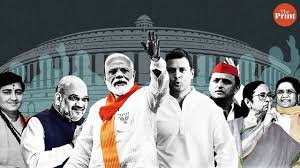
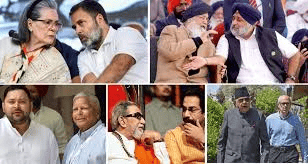
In the world’s largest democracy, the political landscape is perpetually in motion, making India politics news a constant and compelling narrative. This news stream captures the high-stakes drama of electoral battles, the intricate policymaking in Parliament, the ideological clashes between national parties, and the complex power dynamics within India’s federal structure.
For anyone seeking to understand contemporary India, following India politics news is indispensable. It goes beyond mere reporting of events; it decodes the motivations of key leaders, analyzes the shifting allegiances of regional parties, and forecasts the implications of policy decisions on 1.4 billion people. The sheer scale and diversity of the Indian polity ensure that India politics news is never dull, encompassing everything from village council elections to geopolitical positioning on the global stage.
Next News : India Support Pausslot as Biggest Online Gaming
The sources of India politics news are as multifaceted as the subject itself. Traditional media houses, 24-hour news channels with overt political leanings, digital-native platforms, and a vibrant ecosystem of political commentators on social media all contribute to a noisy, often polarized, information environment. Core to India politics news is the ongoing tussle between the ruling Bharatiya Janata Party (BJP) led by Prime Minister Narendra Modi and a fragmented opposition coalition, the Indian National Developmental Inclusive Alliance (INDIA). Meanwhile, powerful regional parties like the Dravida Munnetra Kazhagam (DMK) in Tamil Nadu, the Trinamool Congress (TMC) in West Bengal, and others continue to assert their dominance in state politics, ensuring that India politics news is never a simple two-party story.
This article provides a structured digest of the dominant themes and latest developments in India politics news. We will dissect the key national political stories, including the run-up to the 2024 General Elections, analyze crucial state-level electoral battles and their national ramifications, examine significant policy debates and parliamentary proceedings, and explore the sociocultural undercurrents that shape political discourse. By synthesizing these threads, we aim to offer a clear, comprehensive, and timely overview of the forces currently shaping the political destiny of the nation.
The Run-Up to 2024: Election Rhetoric and Alliance Mathematics
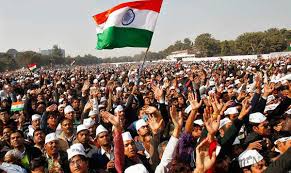
The paramount story dominating all India politics news is the imminent 2024 Lok Sabha elections. The political arena is charged with anticipation, strategy, and intense campaigning. The ruling BJP, seeking a historic third consecutive term under PM Modi, is running on a platform of continuity, national security, Hindu majoritarian pride, and its record on infrastructure and welfare delivery. The opposition INDIA bloc, a coalition of over two dozen parties, is attempting to forge a united front to challenge the BJP’s hegemony, focusing on issues like unemployment, inflation, social justice, and alleged threats to democratic institutions. The daily India politics news is filled with reports on mega-rallies, manifesto promises, and the strategic deployment of top leaders in key battleground states.
A critical subplot in this electoral India politics news is the complex “alliance mathematics.” In India’s first-past-the-post system, pre-poll seat-sharing agreements between allies are crucial to avoid splitting the anti-incumbent vote. Negotiations within the INDIA bloc, particularly in states like Uttar Pradesh, Maharashtra, West Bengal, and Delhi, are fraught with tension and frequently break down, leading to dramatic headlines. The BJP’s own efforts to expand its reach in the South and East through new partnerships or by weakening regional parties are equally scrutinized. Every defection, every public statement from a key ally, and every opinion poll shifts the narrative in the relentless cycle of India politics news related to 2024.
Beyond the alliances, the electoral narrative is shaped by potent issues. The opposition is striving to make “price rise” and “joblessness” central themes, while the BJP emphasizes its “double-engine sarkar” model (same party ruling at Centre and state), the construction of the Ram Temple in Ayodhya, and the abrogation of Article 370 in Kashmir.
The use of central investigative agencies like the Enforcement Directorate (ED) against opposition leaders is a constant flashpoint, with the opposition alleging political vendetta—a charge that features prominently in accusatory India politics news. The election commission’s preparedness, the role of money and media, and the potential impact of new voter demographics are all subjects of deep analysis as the nation counts down to the polls.
State Elections: The Bellwethers of National Sentiment
While the national election captivates attention, state assembly elections serve as critical barometers of political mood and generate their own intense cycles of India politics news. Recent and upcoming state polls in Rajasthan, Madhya Pradesh, Chhattisgarh, Telangana, and Jharkhand are viewed as semi-finals, offering clues about party performance, leadership appeal, and the effectiveness of campaign strategies ahead of 2024. The outcomes reshape the national opposition landscape and influence the morale and bargaining power of parties within larger coalitions.
The India politics news from state elections often highlights localized issues that override national narratives. In Rajasthan and Madhya Pradesh, agrarian distress, caste equations, and state leadership (the face of the Chief Minister) played decisive roles. In Telangana, regional pride and welfare schemes dominated. The performance of a national party like the BJP or Congress in these states is dissected to understand their organizational strength, their ability to manage anti-incumbency, and their success in crafting a compelling local narrative. Victories and losses in these battles lead to immediate political repercussions—changes in state leadership, realignments of local alliances, and shifts in central strategy—all reported as breaking India politics news.
Furthermore, states with strong regional satraps, such as West Bengal (Mamata Banerjee’s TMC), Odisha (Naveen Patnaik’s BJD), Andhra Pradesh (Jagan Mohan Reddy’s YSRCP), and Delhi (Arvind Kejriwal’s AAP), operate as distinct political universes. India politics news from these states focuses on the ruling party’s governance model, its relationship with the Centre (often combative or transactional), and its strategy to retain power by neutralizing both the BJP and the Congress. The choices these regional leaders make—whether to ally with the BJP or the INDIA bloc, or to remain neutral—are among the most consequential decisions in Indian politics, making their every move a subject of national news speculation.
Parliament in Session: Legislation, Disruption, and Debate
When Parliament is in session, it becomes the epicenter of India politics news. The functioning of the Lok Sabha and Rajya Sabha is a live display of democracy’s health. The passage of the annual Union Budget is the most significant legislative event, covered exhaustively for its tax proposals, spending allocations, and policy directions. Beyond the budget, the government’s legislative agenda, which in recent times has included major reforms to criminal laws, digital data protection, and forest conservation acts, drives substantive policy reporting. The scrutiny of bills by parliamentary committees and the ensuing debates provide depth to governance-focused India politics news.
However, a persistent feature of parliamentary India politics news is disruption. Sessions are frequently marred by opposition protests over various issues: demands for discussions on border tensions, allegations against the government by opposition MPs, or controversies involving the Prime Minister or senior ministers. The resulting adjournments and logjams are critiqued as a failure of deliberation, while parties trade blame through press conferences covered as immediate political news. The role of the Speaker in maintaining order and allotting time for discussions is itself a politically charged subject, reflecting the deep trust deficit between the treasury and opposition benches.
Question Hour, where ministers are held accountable, and debates on matters of public importance are the forums where substantive political exchange is supposed to occur. The quality of these debates, the preparedness of ministers, and the articulation of alternative viewpoints by the opposition are key indicators analyzed in serious India politics news. Furthermore, ceremonial events like the President’s address to Parliament and the presentation of the Economic Survey set the tone for the political year. The parliament session thus serves as a concentrated microcosm of national politics, where strategy, rhetoric, and procedure collide.
The Judiciary and Politics: Landmark Cases and Their Fallout
The Indian judiciary, particularly the Supreme Court, is an inescapable actor in the political drama, and its rulings frequently create seismic shifts in India politics news. Landmark judgments can validate or nullify government actions, redefine constitutional boundaries, and influence electoral politics. Recent examples that dominated headlines include the Court’s verdict on the electoral bonds scheme, which was struck down, ordering disclosure of donors—a decision with massive ramifications for political funding transparency. Similarly, judgments on the abrogation of Article 370 and the Delhi government’s control over services have had direct and profound political consequences.
Public Interest Litigations (PILs) often bring politically sensitive issues before the courts. Cases related to hate speech, electoral malpractices, the use of central agencies, and rights of minorities are closely followed as they intersect directly with ongoing political battles. The appointments of judges, the ongoing debate around the collegium system versus a National Judicial Appointments Commission (NJAC), and allegations of executive interference in the judiciary are “meta-political” stories that concern the very structure of the state’s pillars. These stories form a crucial, if complex, segment of institutional India politics news.
The interface between law and politics is also evident in the numerous cases involving political leaders. The ongoing trials and investigations of several high-profile opposition figures by the Enforcement Directorate (ED) and Central Bureau of Investigation (CBI) are covered not just as legal news but as central political narratives. The timing of arrests, court rulings on bail, and the broader discourse on the alleged “weaponization” of agencies contribute to a highly charged atmosphere. This legal-political nexus ensures that courtrooms often feel like extensions of the political battlefield, with every hearing producing fresh headlines in India politics news.
The Ideological Battleground: Nationalism, Secularism, and Identity

Beneath the day-to-day maneuvering lies a deeper ideological war that shapes the core of India politics news. The dominant political discourse is defined by the clash between the BJP’s vision of “Hindutva” or cultural nationalism and the opposition’s defense of constitutional secularism and pluralism. Issues like the Citizenship Amendment Act (CAA), National Register of Citizens (NRC), uniform civil code, and religious conversions are not just policy debates; they are charged ideological fights over the nation’s identity. India politics news analysis frequently explores how these themes resonate with different voter cohorts and influence political mobilization.
This ideological contest manifests in heated debates over history, education, and culture. Government efforts to revise school textbooks, rename cities and landmarks with Muslim-era names, and celebrate historical Hindu figures are portrayed by supporters as correcting historical wrongs and by critics as majoritarian revisionism. The politics of language, such as the promotion of Hindi, also sparks regional resistance, especially in South India. These cultural-political stories are a staple of India politics news, reflecting the ongoing negotiation of India’s civilizational narrative in the public sphere.
Furthermore, the politics of caste and social justice remains a potent force. The demand for a nationwide caste census by opposition parties, the BJP’s outreach to non-dominant Other Backward Classes (OBCs) and Dalit communities, and the complex negotiations over reservation quotas are perennial issues. The rise of leaders from marginalized communities to top positions in parties is a significant trend. India politics news must constantly decode how parties are crafting social coalitions, balancing traditional vote banks with new aspirational groups, and navigating the fraught terrain of identity politics to build electoral majorities.
The Economic Debate: Growth, Welfare, and Discontent
Economic policy is a fiercely contested political arena, and debates over the economy generate substantial India politics news. The government highlights macro-economic indicators like GDP growth, rising foreign direct investment (FDI), and massive infrastructure spending as proof of its success. Initiatives like the Production Linked Incentive (PLI) schemes and the push for “Atmanirbhar Bharat” (self-reliant India) are central to its narrative. However, the opposition counters by focusing on micro-economic distress: high unemployment, especially among youth, persistent inflation affecting household budgets, and alleged rising inequality.
The management of key sectors like agriculture is politically explosive. The year-long farmers’ protest against now-repealed farm laws was a defining political event. Ongoing issues like minimum support prices (MSP), crop diversification, and the impact of climate change on farmers continue to shape politics in the crucial Hindi heartland. Similarly, the performance of public sector undertakings, the privatization (disinvestment) of major companies, and the health of the banking sector are all subjects of political claim and counterclaim covered in financial-political India politics news.
Welfare politics is another critical front. The scale of the BJP’s direct benefit transfer schemes—providing free food, gas cylinders, and cash assistance to millions—is a powerful electoral tool analyzed in India politics news. The opposition argues these are substitutes for quality jobs and structural reform, while the government presents them as efficient, corruption-free empowerment. The upcoming budget and any announcements related to tax cuts, subsidies, or new welfare missions will be instantly politicized, showing how every economic decision is weighed for its immediate political impact in the highly competitive Indian landscape.
Regional Power Centers and Their National Game
The story of Indian politics cannot be told without its powerful regional protagonists, and India politics news dedicates significant bandwidth to their strategies. Leaders like Mamata Banerjee (West Bengal), M.K. Stalin (Tamil Nadu), Naveen Patnaik (Odisha), and Y.S. Jagan Mohan Reddy (Andhra Pradesh) command absolute loyalty in their states and wield immense influence. Their political style, administrative models, and personal narratives are covered in detail. For instance, Banerjee’s fierce resistance to the BJP’s expansion in Bengal or Patnaik’s sustained, quiet governance that keeps him in power for over two decades are compelling state-specific political stories with national relevance.
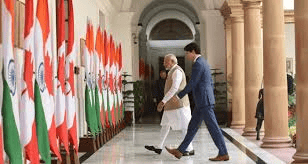
The relationship these regional chiefs have with the Centre is a key dynamic. It ranges from open hostility (as with TMC and AAP) to strategic cooperation (as historically with BJD and YSRCP). This relationship determines the flow of central funds, the pace of project approvals, and the legal challenges a state government might face. India politics news closely watches meetings between regional CMs and the Prime Minister, decoding body language and official statements for signs of thaw or freeze. The choice of a regional party to join, oppose, or stay neutral from national coalitions is a decision that can alter the calculus in Delhi, making them kingmakers or spoilers.
Furthermore, internal dynamics within these regional parties are news-worthy. Succession plans, especially in parties built around a charismatic founder, factional fights, and corruption allegations against regional satraps are all grist for the mill. The rise of the Aam Aadmi Party (AAP) from a Delhi-centric anti-corruption movement to a national party governing two states (Delhi and Punjab) is itself a major political narrative, demonstrating how new forces can disrupt established systems. Covering these regional power centers requires India politics news to be multilingual and culturally nuanced, reflecting the federal reality of India.
The Road to 2024 and Beyond: Scenarios and Implications
As the nation moves closer to the general election, India politics news is increasingly dominated by scenario-building and forecasting. Pundits and pollsters analyze every by-election result, every opinion survey, and every political rally to predict possible outcomes. Key questions define this speculative coverage: Will the BJP secure a majority on its own, or will it need allies? Can the INDIA bloc present a credible, united alternative and dent the BJP’s dominance in the Hindi heartland? What will be the impact of state-level performance on national results? This prognosticative India politics news shapes public perception and influences campaign strategies.
Beyond the immediate election, longer-term trends are being watched. These include the deepening of a presidential-style campaign centered around Prime Minister Modi’s leadership versus a more party- or issue-based contest; the changing role of media and digital campaigning (often called the “WhatsApp election”); and the potential realignment of the party system if the opposition suffers another decisive defeat. The health of democratic institutions—the Election Commission, the judiciary, the free press—amidst heated political competition is a profound underlying concern for commentators.
Ultimately, India politics news is the story of India’s evolving democracy. It is noisy, chaotic, divisive, and incredibly vibrant. It captures the hopes and fears of a billion people as they choose their rulers. It records the clash of ideas, the ambition of leaders, and the power of the ballot. Following it is to witness history in the making, one headline at a time, in a nation where politics is not just a profession or a pastime, but a pervasive and passionate national conversation.
About the Author