India Casino News Legal
Navigating the Complex Landscape of India Casino News

The topic of gambling in India is a complex tapestry woven from threads of law, culture, economy, and technology, making India casino news a dynamic and often contentious field. Unlike many countries with centralized gambling legislation, India’s approach is fragmented. The Public Gambling Act of 1867 prohibits running or visiting a common gaming house, but it allows states to formulate their own laws.
This has led to a patchwork of regulations where certain forms of gambling are legal in some states and strictly forbidden in others. Consequently, India casino news is less about a unified national industry and more about regional developments, legal battles in high courts, and the explosive growth of the online sector. Following India casino news is essential for understanding not just entertainment trends, but also significant revenue, tourism, and regulatory debates shaping the country’s socio-economic fabric.
India Trusted Online Gaming >>> https://bsgvn.com/
India casino news primarily revolves around a few key geographical hubs and digital platforms. The physical, land-based casino industry is legally operational only in a few states—Goa, Daman, and Sikkim—with discussions occasionally surfacing in other states like Kerala (for lotteries) and Maharashtra.
Therefore, a significant portion of India casino news focuses on these regions: new casino license approvals or denials in Goa, the impact of casinos on local tourism in Daman, and the unique model of casino licensing in Sikkim, which also permits online formats. Beyond bricks and mortar, the most turbulent and fast-moving segment of India casino news concerns online gaming, including casinos, poker, and rummy platforms, which operate in a legal grey area and face constant regulatory scrutiny and court challenges.
This article aims to provide a comprehensive overview of the current state of play as reflected in the latest India casino news. We will dissect the ongoing legal and regulatory battles that define the industry’s boundaries, highlight developments in the sanctioned casino hubs, explore the booming and controversial online real-money gaming sector, and examine the socio-economic arguments that underpin this multi-billion dollar discourse. Whether you are an industry stakeholder, a policy observer, or a curious reader, this synthesis of India casino news will offer clarity on one of India’s most intriguing and evolving sectors.
The Legal Framework: A Persistent State of Flux

At the heart of most India casino news is the ambiguous and evolving legal landscape. The Constitution of India places “betting and gambling” on the State List, meaning individual state legislatures have the power to legalize, regulate, or prohibit it within their territories. This decentralization is the primary source of both opportunity and confusion.
Major India casino news often breaks when a state proposes new legislation or amends existing laws. For instance, states like Tamil Nadu and Karnataka have made headlines for attempting to ban online gambling, only to have their laws challenged and stayed by the courts. These legal rollercoasters are a staple of India casino news, highlighting the tension between state autonomy and the fundamental rights of operators and players.
The judiciary plays an outsized role in shaping the industry, making court rulings a critical component of India casino news. The Supreme Court of India has historically distinguished between “games of skill” and “games of chance.” In landmark judgments, the Court has ruled that games where skill predominates over chance, such as horse racing (betting on the tote) and card games like rummy, are not “gambling” and can be regulated as business activities.
This distinction is the legal lifeline for the massive online fantasy sports and rummy industry. However, the line remains blurry. Recent India casino news has been dominated by cases where state governments argue that online poker or even fantasy sports constitute gambling, leading to protracted legal battles that determine the fate of billion-dollar companies.
Another central legal theme in India casino news involves the regulation of offshore online casino platforms. Hundreds of international gambling websites accept Indian players, operating from jurisdictions like Malta, Curacao, and the Isle of Man. Their legal status is precarious. While accessing these sites isn’t explicitly illegal for players in most states, advertising or providing payment processing for them within India is a legal risk. The Ministry of Electronics and Information Technology (MeitY) has been designated as the central regulator for online gaming, and its proposed rules to create a self-regulatory mechanism are eagerly awaited and hotly debated in every roundup of India casino news. The outcome will fundamentally reshape the digital gambling landscape.
Goa: India’s Premier Casino Destination Under Scrutiny
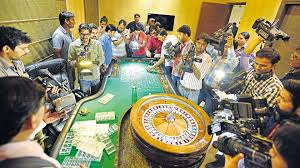
When one thinks of physical casinos in India, Goa is the undeniable epicenter, and developments here consistently lead India casino news. The state legalized casino gambling in the 1970s to boost tourism. Today, it hosts a vibrant industry comprising offshore “floating casinos” anchored in the Mandovi River and several onshore casinos in five-star hotels. India casino news from Goa frequently covers the political and social debates surrounding this industry. There is perennial discussion about moving the offshore casinos out of the Mandovi River to a designated offshore location to address environmental and aesthetic concerns, a plan that has been announced and delayed for years, making it recurring headline material.
The economic impact of casinos is a double-edged sword reported in India casino news. On one hand, they are a significant source of state revenue through license fees and taxes, and they support thousands of jobs directly and indirectly in hospitality and tourism. Major events and high-roller traffic are often covered in trade-focused India casino news.
On the other hand, local activists and opposition parties regularly protest the social ills associated with gambling, including addiction and financial ruin for some residents. The issue of whether locals should be allowed to enter casinos (currently permitted) is a persistent political football. Any move by the state government to issue new licenses, increase fees, or change operational rules instantly becomes major India casino news, reflecting the delicate balance Goa tries to strike between tourism revenue and social welfare.
Recent India casino news from Goa has also touched on modernization and competition. With the rise of sophisticated online alternatives, the traditional casino operators are investing in upgrading their facilities, adding international-standard entertainment, and improving customer experience to retain their clientele. Furthermore, the health of the industry is seen as a bellwether for Goa’s tourism economy; a slump in casino revenue often signals broader challenges in attracting high-spending tourists. Thus, financial results and market analyses from Goa’s casinos are closely watched metrics in business-focused India casino news.
Sikkim and Daman: The Other Players in the Land-Based Scene

Beyond Goa, the states of Sikkim and Daman constitute the other legal land-based casino markets, and their developments provide important regional angles to India casino news. Sikkim’s approach is unique. It passed the Sikkim Casino Games (Control & Tax) Act in 2002, which allows for both land-based casinos (currently operating in certain five-star hotels in Gangtok) and, notably, licenses for online casino and gaming platforms. This has positioned Sikkim as a potential hub for regulated online gaming operators seeking an Indian license. India casino news often speculates on whether major international operators will seek Sikkim licenses if central regulation becomes more welcoming, though the state’s small size and remote location present limitations.
Daman, a Union Territory, also permits land-based casinos within specified hotel premises. The market here is smaller than Goa’s but serves a similar tourist demographic. India casino news from Daman tends to be less frequent but focuses on regulatory compliance, the impact on local employment, and occasional discussions about expanding the industry.
The dynamics in both Sikkim and Daman are influenced by the shadow of Goa; they often position themselves as slightly more regulated or niche alternatives. However, they face similar societal pressures. Any scandal or major enforcement action in these smaller markets, such as allegations of illegal money handling or violations of licensing conditions, quickly becomes noteworthy in the broader spectrum of India casino news, serving as a case study for regulation in mini-markets.
The existence of these legal enclaves raises an ongoing debate covered in policy-oriented India casino news: should more states legalize and regulate casinos to curb illegal gambling and capture tax revenue? Proponents argue that a regulated model, as seen in Goa, brings transparency, age verification, responsible gambling protocols, and significant state income. Opponents cite social costs and moral hazards. This debate surfaces whenever a state facing budgetary pressures or looking to boost tourism, such as some in the Northeast or even Maharashtra, floats the idea of exploring casino legalization. Such speculative reports are a recurring feature in forward-looking India casino news.
The Digital Revolution: Online Casinos and Real-Money Gaming
The most explosive and controversial segment of India casino news is undoubtedly the online domain. The proliferation of smartphones and affordable internet has fueled an unprecedented boom in real-money online gaming (RMG). This includes not only casino classics like slots, roulette, and blackjack offered by international sites but also homegrown platforms for rummy, poker, and fantasy sports, which leverage the “game of skill” legal argument. India casino news in this sector is a whirlwind of funding announcements, celebrity endorsements, new game launches, and, most importantly, regulatory crackdowns.
The scale is immense. India is one of the world’s largest markets for online fantasy sports apps like Dream11 and MPL. Poker platforms like Adda52 and PokerBaazi have thriving communities. Furthermore, countless overseas-licensed online casinos aggressively market to Indian players, offering localized payment methods like UPI and popular games like Andar Bahar and Teen Patti. India casino news regularly reports on the marketing wars between these platforms, their sponsorship of major sports leagues like the IPL, and their massive user acquisition costs. The entry of deep-pocketed foreign investors into Indian gaming startups is also a frequent business headline.
However, this gold rush is fraught with peril, a theme constantly highlighted in India casino news. The primary risk is regulatory. States like Andhra Pradesh, Telangana, Tamil Nadu, and Karnataka have attempted outright bans on online gambling, affecting rummy and poker sites. These bans are immediately challenged in court, leading to a confusing scenario where apps might be blocked in one state but accessible in another.
The central government’s move to impose a 28% Goods and Services Tax (GST) on the full face value of bets (not just gross gaming revenue) from October 2023 sent shockwaves through the industry, making tax policy a central topic in all recent financial India casino news. This decision threatens the profitability of many operators and could lead to market consolidation.
Economic Impact and the Taxation Battleground
The economic narrative is a powerful undercurrent in India casino news. The legal gambling sector—both physical and online—contributes substantially to government coffers, corporate revenues, and employment. In Goa, casino taxes are a vital revenue stream. For online skill gaming companies, they represent a multi-billion-dollar industry attracting foreign direct investment (FDI). India casino news often features reports from consulting firms like KPMG or Deloitte projecting market growth, highlighting the sector’s potential as a technology and employment driver, especially for young developers and data analysts.
The taxation debate, however, is where economics meets high-stakes policy. The recent GST Council decision to levy a 28% tax on the full deposit value (or bet amount) in online gaming, casinos, and horse racing has become the single most critical issue in contemporary India casino news.
The industry argues that this model is untenable, as it taxes the total pool of money circulating (the bets) rather than the operator’s revenue (the commission or profit), which could be as low as 5-15%. They warn it will wipe out legitimate operators, drive players to illegal, untaxed offshore sites, and stifle innovation. Proponents of the tax see it as a way to curb gambling and ensure a fair share of revenue from a lucrative activity.
Coverage of this issue in India casino news includes intense lobbying efforts by industry bodies like the All India Gaming Federation (AIGF) and the E-Gaming Federation (EGF), their legal challenges, and analysis of the potential fallout. Quarterly financial results from listed gaming companies are now scrutinized for the impact of the new tax regime. Furthermore, there are parallel discussions about imposing TDS (Tax Deducted at Source) on player winnings. This complex tax saga is a definitive case study in how fiscal policy can make or break an emerging industry, and its resolution will be a watershed moment reported in every future chapter of India casino news.
Social Responsibility and the Shadow of Addiction
Amidst the business and legal stories, responsible gambling and addiction are critical, somber themes in India casino news. As accessibility increases, so do concerns about problem gambling. Reports of individuals losing life savings, accruing massive debt, or even cases of suicide linked to gambling losses periodically surface, prompting public outcry and calls for stricter controls. These tragic stories are a stark counterpoint to the glamorous advertising and are covered by mainstream media as important social India casino news.
In response, the concept of “responsible gaming” is becoming a corporate mantra. India casino news from the industry side now frequently includes announcements of new player protection tools: features that allow users to set deposit limits, take “cool-off” periods, or self-exclude. Industry associations are developing codes of conduct and running awareness campaigns. The proposed central regulations are also expected to mandate strong player protection measures, age and identity verification (know-your-customer or KYC norms), and grievance redressal mechanisms. How effectively these measures are implemented is a growing focus for watchdogs and a key aspect of reputational India casino news for operators.
The role of advertising is particularly contentious. The sheer volume of advertisements for fantasy sports and rummy apps on television and during cricket matches has drawn criticism from child rights activists and mental health professionals. India casino news covers regulatory discussions about potentially restricting such ads, especially during live sports events, to prevent the normalization of gambling among minors. Balancing commercial speech with social protection is an ongoing debate that reflects the broader societal negotiation over gambling’s place in modern India.
The Future: Regulation, Technology, and Market Evolution
Predicting the future is a favorite pastime in analysis pieces within India casino news. The consensus is that some form of central regulation for online gaming is inevitable. The key questions are: How prohibitive will it be? Will it follow a “game of skill” vs. “chance” distinction? Will it create a licensing regime that allows and regulates online casinos explicitly, or will it continue to prohibit them while tolerating skill games? The direction the MeitY rules take will be the most significant piece of India casino news in the coming years, potentially unlocking institutional investment or causing a sector-wide contraction.
Technology will continue to drive innovation, generating its own stream of India casino news. The adoption of blockchain for provably fair games, the use of virtual reality (VR) to create immersive casino experiences, and the integration of artificial intelligence for both personalized gameplay and better detection of addictive behavior are all on the horizon. Furthermore, the convergence of gaming and entertainment, often called “gamification,” will blur lines further, presenting new regulatory challenges.
Finally, the market is likely to consolidate. The stringent GST regime may force smaller players to shut down or be acquired. Larger, well-capitalized operators who can navigate the compliance burden and invest in responsible gaming technology will dominate. Partnerships between Indian companies and established international gambling firms may increase if regulations permit. The India casino news of tomorrow will likely tell a story of a more structured, possibly smaller, but definitely more regulated and mature industry, as the country grapples with defining the role of chance, skill, and risk in its digital age.
About the Author