Delhi News Now Live Updates
The Pulse of the Capital: Why Delhi News Now Matters
In the relentless rhythm of India’s National Capital Territory, staying updated with Delhi news now is more than a habit—it’s a necessity for survival and navigation. The city, a sprawling metropolis of over 30 million, functions as the nation’s political heart, a cultural crossroads, and an economic engine, all while grappling with profound urban challenges.
Delhi news now provides a real-time, vital snapshot of this dynamic ecosystem, offering critical insights into political decisions that reverberate nationally, civic emergencies like hazardous air pollution, and daily disruptions that affect the commute, health, and safety of every resident. For Delhiites, following Delhi news now is the key to making informed decisions, from choosing a safer travel route during a protest to deciding whether children should play outside on a severely polluted day.
Check Delhi News Now > New Booming Games Pausslot
The sources for Delhi news now are as vast as the city itself, creating a 24/7 information stream. Major national dailies publish extensive city editions, dedicated local TV channels broadcast neighborhood-specific reports, and digital platforms and social media offer instantaneous, often chaotic, updates from citizen journalists. The core of Delhi news now often revolves around the intense administrative tussle between the elected Aam Aadmi Party (AAP) government and the central government-appointed Lieutenant Governor. This unique power dynamic ensures that even routine governance announcements can become breaking political news. Discerning the critical signal from the overwhelming noise in Delhi news now requires an understanding of these underlying structural tensions.
This article serves as a comprehensive live digest of the most pressing stories shaping Delhi news now. We will delve into the top political headlines and power struggles, the latest environmental alerts and pollution data, real-time updates on transportation and major infrastructure disruptions, significant cultural and civic happenings, and pressing law and order issues. By synthesizing these diverse threads into a coherent overview, we aim to provide a clear, actionable, and timely picture of what is unfolding in the capital at this very moment.
Political Power Plays and Governance Updates
The political arena consistently generates the most volatile and closely followed Delhi news now. The unique constitutional framework governing Delhi ensures a continuous power struggle between the AAP government and the Lieutenant Governor’s (LG) office, leading to frequent legal battles and administrative gridlock. Right now, Delhi news now is likely dominated by the aftermath of recent Supreme Court hearings on the control of services or the ongoing investigations by central agencies into the now-scrapped excise policy. Daily reports detail the latest court filings, press conferences by Chief Minister Arvind Kejriwal or the LG, and the resulting impact on everyday governance, from teacher transfers to hospital upgrades.
Simultaneously, the Delhi news now cycle is rife with updates related to the 2024 Lok Sabha elections. As the national capital, Delhi’s seven parliamentary seats are a high-prestige battleground. Current coverage would include the latest on seat-sharing negotiations between the AAP and the Indian National Congress within the INDIA opposition bloc, the BJP’s candidate selection and campaign strategies, and the scheduling of major political rallies. The arrest or questioning of any Delhi-based political figure by the Enforcement Directorate (ED) instantly becomes breaking news, fueling allegations of political vendetta and dominating the day’s headlines.
Beyond the confrontations, substantive governance stories also feature in Delhi news now. This includes the rollout of new public welfare initiatives like the expansion of the Mohalla Clinic network, announcements regarding free electricity and water schemes, or the status of major infrastructure projects like the Delhi-Meerut Expressway or the Phase-IV metro corridors. The tussle over the city’s budget and the financial health of the Municipal Corporation of Delhi (MCD) are also recurring themes. These stories highlight the practical challenges of governing a megacity where administrative authority is split, making every policy announcement a potential flashpoint in the daily news feed.
Environmental Emergency: Real-Time Air Quality and Health Alerts
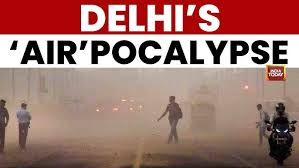
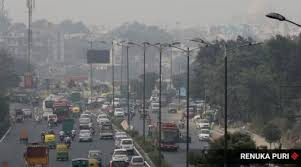
As the winter season tightens its grip, environmental concerns catapult to the top of the Delhi news now priority list. The city’s air quality, which plummets to hazardous levels annually, is a subject of live monitoring and urgent public health reporting. Delhi news now prominently features the hourly Air Quality Index (AQI) readings from the Central Pollution Control Board (CPCB) and the System of Air Quality and Weather Forecasting and Research (SAFAR). At this moment, the AQI is likely in the “Very Poor” to “Severe” range, with real-time data on PM2.5 and PM10 concentrations exceeding safe limits by 10-15 times. These figures are accompanied by immediate health advisories, especially for children, the elderly, and those with respiratory conditions.
The Delhi news now feed actively dissects the causes and the government’s response. Current reports will detail satellite images showing stubble burning hotspots in neighboring Punjab and Haryana, and their contribution to Delhi’s smog. Local factors like vehicular emissions, construction dust, and Diwali-related fireworks (if in season) are also scrutinized. In response, Delhi news now covers the enforcement of the Graded Response Action Plan (GRAP) by the Commission for Air Quality Management (CAQM). Today’s updates might include the implementation of Stage III measures: a ban on non-essential construction, restrictions on BS-III petrol and BS-IV diesel vehicles, and possible directives for schools to shift to online classes.
Longer-term strategies are also reported. Updates on the electric vehicle (EV) policy, the procurement of new electric buses, the progress of the “Yamuna cleaning” projects, and the status of the city’s giant landfill sites at Ghazipur, Bhalswa, and Okhla are part of the ongoing environmental narrative. However, the most immediate Delhi news now is crisis-driven: it tells you whether to wear an N95 mask today, if your morning walk is safe, and what the government is doing (or not doing) in real-time to address the toxic air that has become Delhi’s inescapable winter reality.
Traffic, Transit, and Infrastructure Disruptions
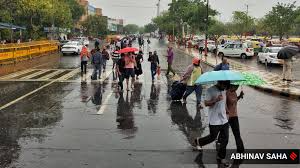
For the daily commuter, Delhi news now is an essential tool for navigating the city’s chaotic arteries. Real-time traffic updates are a critical service. At any given moment, news apps and radio bulletins report on major snarls caused by breakdowns, protests, or waterlogging. Key trouble spots like the ITO intersection, the Dhaula Kuan flyover, the stretches near the Delhi-Gurugram border, and the roads leading to the three airport terminals (T1, T2, T3) are under constant watch. Delhi news now provides alternative route suggestions, information on road closures for VIP movements or official events, and updates on the repair work of potholes or broken dividers.
The Delhi Metro, the city’s lifeline, is a major focus. Delhi news now provides instant updates on any delays, technical glitches, or changes in train frequency on its extensive network. Inauguration of new sections, like those under Phase-IV, or the announcement of trial runs are also significant news. For those using the bus system, updates on diversions due to protests or road closures, and the real-time location of buses through apps, are part of the transit ecosystem coverage. Furthermore, updates on the Indian Railways network, especially at the New Delhi, Old Delhi, and Anand Vihar stations regarding train delays or cancellations due to fog in winter, are crucial for thousands of daily passengers.
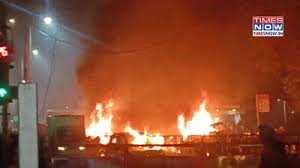
Infrastructure projects themselves are sources of both progress reports and disruption news. Delhi news now covers the latest on the construction of new flyovers, underpasses, and the expansion of highways, but also details the resulting traffic diversions and congestion they cause. Incidents of road cave-ins, water pipeline bursts flooding streets, or fires in electrical transformers are reported as breaking news, often with live images or videos from the scene, highlighting the strain on the city’s aging civic infrastructure and the immediate impact on mobility.
Crime and Law & Order: Safety Alerts and Policing
Ensuring safety in a megacity is a Herculean task, and incidents of crime feature prominently in Delhi news now. Breaking news may include a major arrest in a high-profile case, a narcotics bust in areas like Dwarka or Rohini, or the crackdown on a cyber fraud ring. Updates on long-running investigations, such as those into the 2020 Northeast Delhi riots or high-profile murder cases, also resurface periodically. The Delhi news now feed serves as both a record of law enforcement action and a public safety alert system.
A persistent and deeply troubling focus is the safety of women and children. Reports of assaults, harassment, and incidents of domestic violence are reported with urgency, often sparking public outrage and debates about police responsiveness. The security of public transportation, parks, and residential colonies after dark remains a chronic concern. In response, Delhi news now also covers preventive measures, such as increased patrolling in vulnerable areas, the installation of new CCTV cameras, and self-defense workshops organized by the police or NGOs. These stories reflect the community’s ongoing struggle for safer public spaces.
The digital realm presents new frontiers for crime. Delhi news now increasingly covers sophisticated cyber frauds, phishing scams targeting bank accounts through UPI, and social media-related offenses. Daily police advisories warning citizens about the latest modus operandi of scammers are common. Furthermore, the law and order preparations for large gatherings—be it political rallies at Ramlila Maidan, farmer protests at the Singhu or Tikri borders, or major religious processions—are detailed extensively. Reports on traffic diversions, prohibitory orders under Section 144, and heavy police deployments form a significant part of the Delhi news now during such events, directly impacting daily life.
Culture, Events, and the Social Fabric
Amidst the hard news of politics and crises, Delhi’s vibrant cultural life provides a colorful and essential counterpoint. Delhi news now covers the city’s bustling cultural calendar. Today’s feed might highlight the opening of a major exhibition at the India Habitat Centre, a new theatrical production at the National School of Drama, or a music festival at the Sunder Nursery. The revival of heritage walks in Mehrauli or Shahjahanabad (Old Delhi) also finds enthusiastic coverage, especially in weekend previews. These stories offer a respite and remind residents of the city’s rich historical and artistic tapestry.
Seasonal festivals and markets define the city’s social rhythm. Depending on the time of year, Delhi news now will be filled with vibrant images and stories from Diwali melas in Connaught Place, Christmas celebrations in churches across the city. The logistics of these events—special traffic arrangements, cultural programs organized by the Delhi Tourism department, and the food festivals that accompany them—are covered in delightful detail. For residents, this information is key to planning their leisure and participation in the city’s communal life.
The intellectual and academic sphere also contributes to the social Delhi news now. Updates from prestigious universities like Delhi (DU) University and Jawaharlal Nehru (JNU) University—covering everything from contentious student union elections and academic controversies to prestigious conference hosting—are regularly reported. Book launches by prominent authors at the India International Centre, literary festivals like the Delhi Literature Festival, and thought leadership summits on issues of national importance showcase Delhi’s role as the country’s premier forum for ideas and discourse.
Civic Essentials: Water, Power, and Urban Management
The fundamental pillars of urban existence—consistent access to water and electricity, coupled with competent civic administration—are under perpetual strain in the capital. The efficacy of these services directly dictates the rhythm of daily life for millions, and their frequent shortcomings generate a continuous stream of urgent updates in the city’s news cycle.
Water security remains a volatile issue, intensifying with seasonal extremes. Contemporary coverage often centers on the precarious levels in key reservoirs and the subsequent rationing measures imposed by the water authority. Neighborhoods on the city’s peripheries and those in topographically disadvantaged zones frequently experience acute shortages, leading to public agitation. The protracted inter-state disputes over riparian rights and allocation shares further complicate this crisis, underscoring Delhi’s vulnerable reliance on external sources for its most vital resource.
The electrical grid, while more advanced than in many parts of the country, is not immune to failure. Localized breakdowns, often triggered by equipment overload during peak demand periods or infrastructural wear and tear, can plunge sectors into darkness for hours. Real-time information on outage zones, shared by the distribution companies via official channels and news platforms, becomes crucial for residents and businesses to adapt their schedules.
During climatic extremes, such as scorching heatwaves or dense winter fog, the stability of the power network is directly linked to public health and safety, making its performance a critical weather-dependent news item. Parallel to these operational reports, the ongoing political discourse regarding the fiscal sustainability of providing subsidized electricity forms a persistent policy debate within the civic narrative.
The scope of municipal governance, managed by the unified civic body, extends to the very fabric of the urban environment. Its performance is measured by the cleanliness of public spaces, the efficiency of waste collection and processing, and the maintenance of local infrastructure. Persistent challenges, such as the monumental task of reclaiming land from towering legacy landfill sites, are subjects of investigative reporting and judicial scrutiny.
The seasonal surge in mosquito-borne illnesses prompts coverage of preventive fumigation campaigns and the capacity of public health facilities, directly linking civic management to community wellness. These stories resonate on a deeply personal level with citizens, as they concern the immediate quality of the living environment, often mobilizing resident welfare associations and triggering public interest litigation to demand accountability and action.
Anticipating the Immediate Future: What’s Next for the City
The news ecosystem in the capital is inherently predictive, serving as an early-warning system for its inhabitants. Informed by current developments, several scenarios are likely to unfold in the short term. Ongoing constitutional and legal conflicts between different tiers of government will advance to their next judicial or procedural phases, potentially yielding new rulings or escalating tensions. Environmental forecasts suggest a further deterioration in air quality, which may compel authorities to enact stricter provisions of the graded response plan. This could include mandating a shift to remote work for certain sectors and reintroducing traffic rationing policies to curb vehicular emissions, decisions that would be communicated as urgent advisories.
The city’s vibrant social and event calendar also drives anticipatory coverage. Announcements regarding major upcoming festivals, international summits, or large-scale public gatherings are followed by detailed logistical bulletins. These include changes to mass transit schedules, extensive traffic diversion plans, and heightened security protocols that residents must navigate. As colder weather sets in, administrative focus will shift to contingency measures for flight operations amid reduced visibility and the activation of shelters for vulnerable homeless populations, with progress and shortcomings reported in equal measure.
Ultimately, the constant flow of city updates paints a portrait of a metropolis engaged in a relentless balancing act. It is a narrative of monumental aspirations constantly tested by systemic pressures and logistical complexities. Engaging with this live information feed is, therefore, a practical strategy for urban adaptation. It equips residents with the knowledge to preempt disruptions, seize opportunities, and contribute to civic discourse. The headlines are more than just reports; they are the vital signs of a dynamic, challenging, and endlessly fascinating megacity, providing the essential context needed to navigate its promises and perils each day.
About the Author