Happening in India
Happening in India: A Deep Dive into the Political Landscape of December 2025
The political arena in India is a dynamic and ever-evolving theatre, and December 2025 is proving to be a month of significant transitions, strategic manoeuvres, and heated debates. Understanding what is happening in India politically requires looking beyond daily headlines to grasp the underlying currents shaping the world’s largest democracy. This month, as the year draws to a close, political actors are positioning themselves for the crucial final quarter of the financial year and setting the stage for upcoming electoral battles. The narrative is a complex mix of policy implementation, opposition regrouping, and socio-political discourse that defines the contemporary Indian experience.
Several dominant themes are central to what’s happening in India this December. The winter session of Parliament, typically a fiery affair, is underway with a packed legislative agenda focusing on economic reforms and social welfare amendments. Simultaneously, key state assemblies are witnessing intense political activity as parties consolidate their positions post recent elections and prepare for the next round. The political discourse is also heavily influenced by ongoing judicial pronouncements on landmark cases, which are having a direct impact on governance and public policy. These interconnected threads create the intricate tapestry of current Indian politics.
Furthermore, the role of digital mobilization and media narratives cannot be overstated in today’s political landscape. Social media platforms are abuzz with debates on government performance, opposition critiques, and viral campaigns driven by both ruling and opposition parties. This digital public sphere acts as a real-time barometer of political sentiment and is an essential component of what is happening in India. This article provides a comprehensive, non-partisan analysis of these critical developments, offering clarity on the events and their potential implications for the nation’s future.
The Winter Session of Parliament: Legislative Agenda and Political Standoffs
A primary focus of what’s happening in India politically is the Winter Session of Parliament. This session is crucial for the government to push through pending legislative business before the budget session in early 2026. The agenda is reported to be heavy, featuring a mix of new bills and amendments to existing laws, particularly in sectors like infrastructure, digital governance, and agriculture. The government’s floor management strategy is being tested as it seeks to ensure smooth passage of its priority legislation amidst a determined opposition.
The opposition, having reorganized its strategy after recent electoral performances, is aiming to hold the government accountable on several fronts. Key issues being raised include inflation, particularly the prices of essential commodities as winter sets in, unemployment data, and the implementation status of central schemes in various states. Heated debates and demands for discussions under various procedural rules are leading to frequent adjournments, a common but significant feature of India’s parliamentary democracy. This tug-of-war between treasury and opposition benches is a classic element of what’s happening in India‘s democratic process each session.
Beyond the noise, important legislative work is progressing. Committees are examining the finer details of complex bills related to environmental regulations and technological governance. The session is also witnessing discussions on India’s foreign policy stance in a changing global order, with ministers making statements on strategic partnerships and border security. The outcome of this session will set the policy tone for the coming months and is a clear indicator of the government’s political capital and the opposition’s efficacy, making it a cornerstone of political activity happening in India this December.
State Politics in Flux: Post-Election Analyses and Preparations
While national politics captures headlines, the real crucible of Indian democracy is often at the state level. December 2025 is a period of intense activity in several key states, a vital part of what’s happening in India. In states where assembly elections were concluded recently, newly formed or re-elected governments are presenting their first full budgets or winter session agendas. These documents are being closely scrutinized for their alignment with regional aspirations and their divergence from or convergence with central policies.
In states where elections are on the horizon (likely in early to mid-2026), December is a month of strategic groundwork. Major political parties are engaged in internal assessments, potential candidate screenings, and alliance negotiations. Tour by national leaders to these states has intensified, with rallies and organizational meetings focusing on local issues like water scarcity, job creation, and law and order. The political happening in India is thus a multi-layered phenomenon, with state-level dynamics often influencing the national narrative and vice-versa.
One significant trend observed is the focus on hyper-local governance and the promise of greater fiscal autonomy for local bodies, a theme being championed by various parties. This includes discussions around the direct transfer of funds to municipal corporations and panchayats for specific development projects. The political messaging is increasingly tailored to micro-electorates, leveraging data analytics and grassroots feedback. This granular focus in state politics is a defining characteristic of the complex political ecosystem happening in India today, where national issues are often filtered through regional prisms.
Key Policy Announcements and Economic Direction
The government’s economic policy announcements are always a central part of what’s happening in India. In December 2025, the focus is on reviewing the progress of the Union Budget 2025-26 and making mid-course corrections if necessary. Key ministries are holding high-level meetings to assess capital expenditure, infrastructure project delivery, and the performance of production-linked incentive (PLI) schemes across various sectors. Announcements regarding ease of doing business initiatives and efforts to attract further foreign direct investment are expected, signaling the government’s economic priorities.
A major policy area under the spotlight is sustainable energy and climate commitments. India’s progress on its Nationally Determined Contributions (NDCs) under the Paris Agreement is being discussed in policy circles, with potential new initiatives for green hydrogen, electric vehicle infrastructure, and solar power generation likely to be emphasized. The intersection of economic growth and environmental sustainability is a key policy challenge, and the decisions taken now will have long-term ramifications. This policy direction is a critical component of the strategic planning happening in India.
Furthermore, social welfare policies, particularly those related to food security (through the Public Distribution System) and healthcare (Ayushman Bharat), are undergoing review for expansion and digital integration. The use of technology to reduce leakages and ensure targeted delivery is a constant theme. These policy reviews and announcements are not merely administrative but are deeply political, affecting millions of lives and forming the basis of political campaigning. Thus, the economic and policy sphere is a crucial layer of what is happening in India this December.
Happening in India : The Opposition’s Strategy | Unity Efforts and Narrative Building
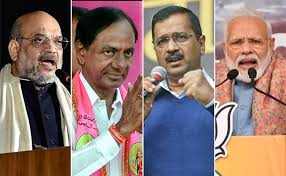
A critical aspect of what’s happening in India politically is the state of the opposition. December 2025 appears to be a month where concerted efforts are being made to build a more cohesive anti-incumbency narrative and a structured alliance framework for future elections. Various opposition parties are holding coordination meetings, both formally and informally, to identify common ground on issues such as federalism, electoral reforms, and social justice. The challenge of presenting a united front while managing individual party ambitions remains a central drama.
The opposition is focusing its critique on specific governance issues, including agricultural distress in certain regions, allegations of bias in the investigation of central agencies, and questions on data privacy related to large-scale digital government projects. They are attempting to move beyond fragmented criticism to a more consolidated “alternative vision” for the country. This involves drafting common minimum program outlines and public consultations with civil society and experts. This rebuilding and re-stratification process is a significant political development happening in India.
Simultaneously, individual opposition-led state governments are showcasing their own governance models, positioning them as successful alternatives to the centre’s approach. Investments in education, health, and public works in these states are being highlighted as examples of equitable development. The effectiveness of this dual strategy—uniting at the national level on critical issues while demonstrating performance at the state level—will be a key determinant of the political balance in the coming years, making it a pivotal theme in the opposition playbook happening in India right now.
Judicial Pronouncements and Their Political Ramifications
The judiciary continues to play a pivotal role in shaping the political context happening in India. December 2025 is witnessing hearings and potential judgments in several high-profile cases that have significant political undertones. These include matters related to electoral bonds and campaign finance transparency, disputes over religious and cultural site management, and challenges to certain administrative and environmental decisions taken by the executive. The outcomes of these cases can instantly alter the political landscape.
Courts are also adjudicating on matters of federal structure, such as disputes between state and central governments over resource sharing, administrative jurisdiction, and the implementation of national education or health policies. These pronouncements reinforce the constitutional balance of power and are closely watched by political parties and analysts alike. The judiciary’s interpretation of laws in an evolving digital society, particularly concerning free speech, privacy, and regulation of online content, also has direct political consequences.
The interaction between the judiciary and the executive is a constant feature of a vibrant democracy. Government responses to court directives, whether in the form of compliance or seeking reviews, become part of the political narrative. Similarly, opposition parties often seek judicial recourse on issues they are unable to raise effectively in the legislature. Therefore, the courtrooms of India are, in many ways, an extension of the political arena, and the proceedings happening in India‘s Supreme Court and High Courts are integral to understanding the full political picture this December.
Digital Politics: Social Media Campaigns and Information Warfare
In contemporary India, no political analysis is complete without addressing the digital domain. What’s happening in India politically is massively amplified, and sometimes even driven, by activity on social media platforms. December 2025 sees organized campaigns from all major political parties focusing on year-end narratives. The ruling dispensation is highlighting its annual report card—showcasing infrastructure milestones, economic growth statistics, and successful foreign policy engagements through sleek videos and infographics.
The opposition, on the other hand, is utilizing digital tools to amplify local grievances, share videos of protests or parliamentary speeches, and conduct live sessions with leaders to critique government policies. Hashtag wars, trending topics, and meme culture are actively employed to engage younger demographics and shape perceptions. The management of digital party volunteers and influencers is a key organizational activity, making digital mobilization a core political strategy happening in India.
However, this space is also fraught with challenges like misinformation, deepfakes, and polarizing content. Discussions around the need for more robust digital regulations and the accountability of large tech platforms are part of the political discourse. The government’s approach to monitoring and regulating online content, often framed as a matter of national security and social harmony, is a subject of intense debate. Thus, the virtual political battleground is as active and consequential as the physical one, forming a critical layer of what is happening in India today.
Foreign Policy as Domestic Politics: Border Talks and Global Engagements
India’s foreign policy decisions have always had a direct impact on domestic politics, and December 2025 is no exception. High-level diplomatic engagements, particularly with neighbouring countries and major global powers, are being closely followed. Ongoing dialogue regarding border management and strategic partnerships are sensitive issues with significant nationalist sentiment attached to them. Government statements on these matters are instantly parsed for their political messaging and perceived strength or concession.
Multilateral engagements, such as those at the UN or climate conferences, where India articulates its stance on global issues, also resonate domestically. The positioning of India as a ‘Vishwaguru’ (world teacher) or a leading voice of the Global South is a narrative that plays well in certain constituencies. Conversely, opposition parties may question the tangible benefits of such engagements for the common citizen, focusing instead on the costs involved. This interplay between international diplomacy and domestic political validation is a subtle but important aspect of what’s happening in India.
Furthermore, economic diplomacy, including trade negotiations and deals on technology transfer or defence procurement, has domestic industrial and employment implications. Announcements of large investments from foreign companies following state visits are portrayed as successes of the government’s foreign policy. Therefore, the external affairs ministry’s calendar and the Prime Minister’s travel itinerary are not just matters of statecraft but active components of the political narrative construction happening in India this December.
Agricultural Sector Dynamics and Political Messaging
The agricultural community remains a powerful political constituency, and their concerns are perennially central to Indian politics. In December 2025, the focus is on the Rabi (winter) crop season. Issues such as the availability and pricing of fertilizers, minimum support price (MSP) announcements for winter crops, and the status of procurement operations are hot-button topics. Farmer unions are actively engaging with the government, and their protests or satisfaction can swing political fortunes in key agrarian states.
The implementation and proposed modifications to existing agricultural laws, even after the repeal of the controversial farm laws in 2021, continue to be discussed. The government is likely emphasizing increased coverage under the PM-KISAN income support scheme and investments in agricultural infrastructure like warehouses and cold chains. The opposition is focusing on instances of distress, debt, and the need for a legal guarantee for MSP. This ongoing dialogue, and sometimes confrontation, with the agrarian sector is a fundamental political reality happening in India.
Beyond immediate issues, long-term challenges like climate change’s impact on cropping patterns, water conservation, and sustainable farming practices are entering political manifestos. Parties are trying to blend traditional support for farmers with a vision for modern, technology-driven agriculture. The political messaging around agriculture, therefore, is a mix of populist assurances and promises of transformation, reflecting the sector’s critical importance in the nation’s economy and political calculus.
The Urban Governance Focus: Smart Cities and Civic Issues
As India urbanizes rapidly, urban governance has become a critical political battleground. December 2025 sees municipal elections in several important cities, making local civic issues a part of the national political conversation. The performance of the Smart Cities Mission, urban transport projects, waste management, and air pollution are dominant themes. The political affiliation of city mayors and councils is increasingly seen as a reflection of party strength at the grassroots level.
The central government’s role in funding urban development projects through schemes like the AMRUT (Atal Mission for Rejuvenation and Urban Transformation) brings national politics into city governance. The opposition often accuses the centre of favouring cities in states ruled by the ruling party, while the government claims equitable distribution based on project proposals. This tussle over urban resources and credit is a microcosm of the larger political competition happening in India.
For urban voters, issues like congestion, public safety, and the quality of public spaces are determining voting behaviour. Political parties are tailoring their urban agendas accordingly, promising better last-mile connectivity, solutions to waterlogging, and enhanced digital services for citizens. The management of metropolitan cities, with their large populations and media visibility, thus holds significant political weight and is a key area of activity and promise in the current political landscape.
Youth and Employment: The Central Political Anxiety
Perhaps the most pressing issue intertwined with politics happening in India is youth employment. With a large demographic dividend, the government’s performance on job creation is under constant scrutiny. December 2025, being a time of year-end reviews, sees various data points and reports on employment generation being debated fiercely. Government data on formal job creation through the EPFO (Employees’ Provident Fund Organisation) is highlighted, while independent surveys pointing to underemployment or stagnant wage growth are emphasized by critics.
Policy announcements related to skilling initiatives, startup ecosystems, and incentives for labour-intensive manufacturing are closely watched. The opposition’s narrative often focuses on the gap between the number of educated youth entering the workforce and the number of quality jobs available, framing it as a governance failure. This creates a political imperative for all parties to present a credible plan for economic opportunity, making youth aspirational a central theme in all political communication.
Furthermore, the issue of exam integrity for government jobs, recruitment delays in public sector undertakings, and the promise of regularization of contractual positions are potent rallying points. Student unions and youth wings of political parties are particularly active on these issues. The political management of youth expectations, therefore, is not just an economic challenge but a fundamental determinant of social stability and political legitimacy, making it a core concern in everything happening in India politically this December.
Looking Ahead: Implications for the 2026 Political Calendar
The political developments happening in India in December 2025 are not isolated; they are precursors to a politically charged 2026. The outcomes of the winter session, the success or failure of policy rollouts, and the cohesion of opposition alliances will directly influence strategies for upcoming state elections and set the tone for the run-up to the next general election cycle. This month acts as a strategic pivot where parties consolidate their gains and address their weaknesses.
The political discourse is likely to become even more polarized as election dates approach, with a greater emphasis on charismatic leadership versus collective governance, nationalism versus social justice, and centralized development versus federal autonomy. The economic indicators—growth rates, inflation control, and foreign exchange reserves—will be continually weaponized in political debates. The ability of parties to connect with voters on the ground, beyond digital campaigns, will be tested.
In conclusion, the political landscape happening in India in December 2025 is a complex interplay of legislative action, economic management, social policy, judicial oversight, and digital narrative wars. It reflects a mature democracy grappling with the challenges of development, diversity, and global integration. By understanding these multifaceted developments, one gains not just a snapshot of the present moment but also valuable insights into the future trajectory of Indian democracy, which remains as vibrant and contentious as ever.
About the Author